Baran Shajari
Human–AI Research & UX/UI Design
Toronto, Canada
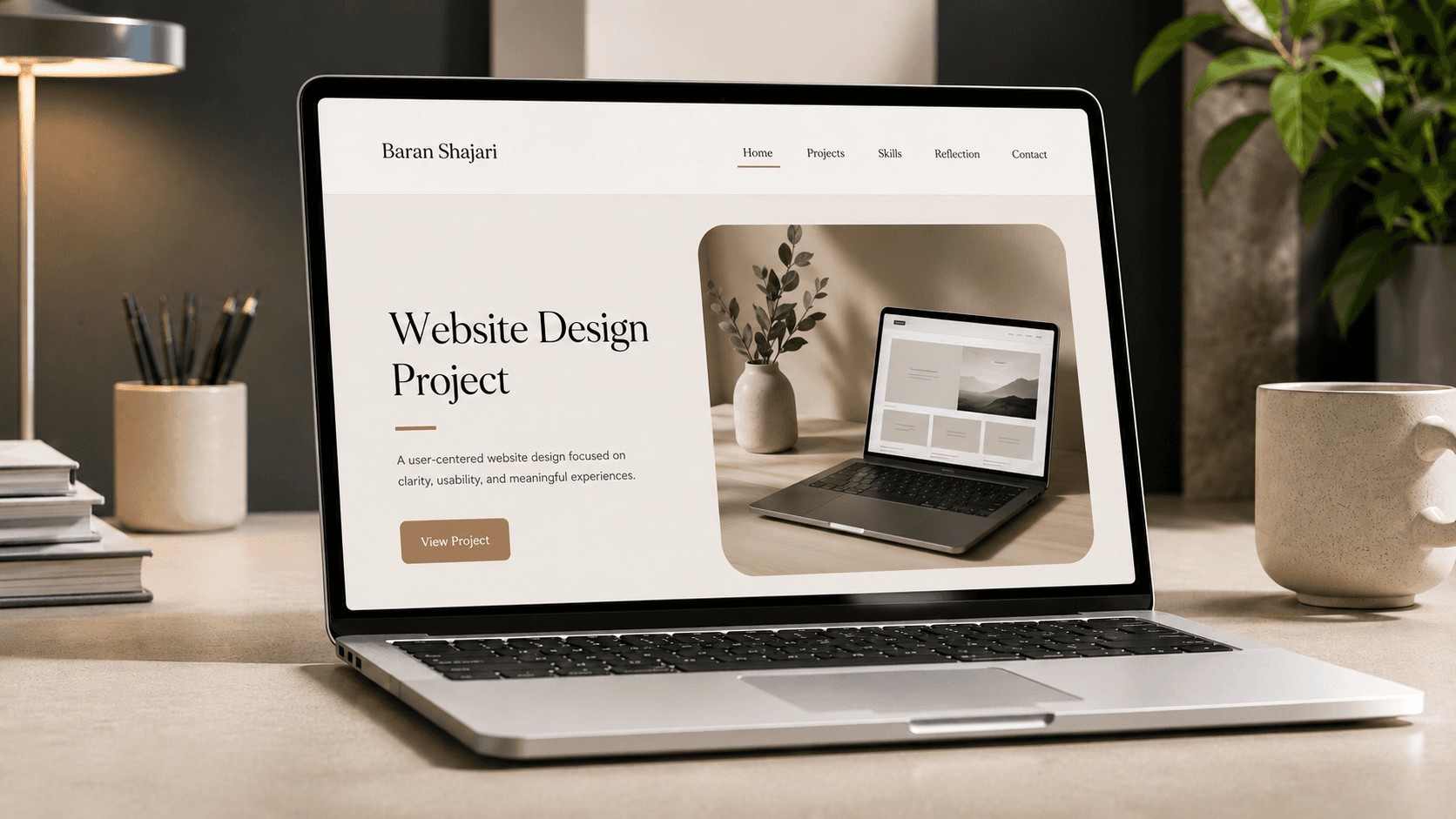
Designing a Clearer Learning Experience
I designed and developed an academic ePortfolio to present research, projects, skills, and reflections through a clear and accessible digital experience. The project focused on organizing complex content, improving navigation, writing for the web, and creating a consistent visual structure across multiple pages. Conducted usability testing with users, identified interaction and content issues, and iterated on the design to improve clarity, navigation, and overall usability.
2024
Overview
This project began as an academic ePortfolio for an undergraduate course in Information Technology at York University.
The goal was to bring together several types of content—including research projects, technical writing, skills, reflections, and contact information—inside one coherent website.
The site was an early UX/UI design project. The main challenge was to create a structure that helped visitors quickly understand:
who I was;
what projects I completed;
what skills I developed;
how the projects were connected;
and how my research and writing improved over time.
The final website included a homepage, projects section, skills page, reflection page, and contact page. It marked the beginning of my interest in user-centred design and in making complex information more understandable through structure and visual hierarchy.
The problem
The project included several assignments, research activities, written reflections, and supporting materials. Without a clear system, the content could easily feel fragmented or difficult to navigate.
The design needed to solve several problems:
organizing multiple projects without overwhelming users;
creating a predictable navigation system;
separating academic writing into scannable sections;
maintaining visual consistency across pages;
making long text easier to read;
and showing progression from early work to later projects.
The UX challenge was to turn a group of separate academic documents into one understandable digital journey.
The site also needed to serve different visitors, including instructors, classmates, and future employers, each of whom might be looking for different information.

Research and discovery
I reviewed the content, grouped related material, and considered what visitors would need to find first. Peer feedback also helped identify issues with headings, spacing, and readability.
The solution
I created a multi-page academic portfolio with clear navigation, consistent page structure, and organized project content.
The final website used:
grouped project pages;
clear headings and subheadings;
shorter text sections;
visual separation between topics;
a dedicated skills page;
a reflection section;
and a consistent navigation pattern.
The design brought separate assignments into one connected experience and made the progression of my work easier to understand.
Reflection
This project introduced me to user-centred web design. I learned how navigation, hierarchy, whitespace, and concise writing can make complex content easier to understand. It also taught me to use feedback as part of the design process rather than treating the first version as final.